Where is the profile of the patient?
What is the profile of the patient?
What seems to be the problem?
What psychiatry problems from the list do you think you have at this point?
First try to help yourself using the mentioned guidelines.
See the list relevant to this situation.
Go through the coping skills.
Go through the questions with each medical condition relevant to you. You will feel better.
You can forward a press release to the nearest media outlet so that they display your problem via the internet.
It is impossible to have in-person face-to-face therapy appointments because millions of individuals need mental health services.
Due to various harms from others, public deliberations of these issues via the internet are required.
Have you ever been diagnosed with any condition from the list?
Who diagnosed you?
How did he or she reach this diagnosis?
How old were you at that point?
How old are you now?
Is your current issue interfering with your everyday activities or your activities with others?
How is your current issue interfering with your everyday activities or your activities with others?
Here is the most important question.
What did you understand?
General psychiatrist: What are the skills and knowledge required for this job?
https://www.qureshiuniversity.com/psychiatryworld.html
Forensic psychiatrist: What are the skills and knowledge required for this job?
https://www.qureshiuniversity.com/forensicpsychiatrist.html
What is considered to be a ICD-10 Mental Health Billable Diagnosis?
https://www.qureshiuniversity.com/icd10p.html
What is included in a mental status exam relevant to age?
Mental Status:
1. Appearance: How does the patient look? Neatly dressed with clear attention to detail.
Well groomed.
Are clothes appropriate to the weather and circumstances?
What is their build – too thin or obese?
2. Behavior:
Key Domains Where Abnormal Behavior May Appear
Common Descriptors / Examples
Hostile, restless, withdrawn, guarded
Agitated, pacing, avoiding eye contact
Normal Presentation
Appropriate for the particular situation
Pleasant
Cooperative, good eye contact, normal psychomotor activity, no unusual movements
3. Cognition: Includes attention, orientation, memory, reasoning, and executive functioning
Common Cognitive Screening Tests
How many are there?
At least 17.
What does Dr. Asif Qureshi recommend to others who are seeing patients in the real world every day?
Functional Activities Questionnaire
Montreal Cognitive Assessment (MoCA)
Mini-Mental State Examination (MMSE)
Do not lie.
Do not misinterpret.
This can get challenged.
4. Level of alertness: Can they remain focused on your questions and conversation? What
is their attention span?
5. Awareness of environment (Orientation): Do they know where they are and what they
are doing here? Do they know who you are? Can they tell you the day, date and year?
6. Mood: How would you describe your mood over the past week?
On a scale of 1-10, with 10 being the best you've ever felt and 1 being the worst, where would you rate your mood right now?
Have you noticed any changes in your ability to feel pleasure or interest in activities?
Are you happy, sad,
depressed, angry? Is it appropriate for their current situation?
Have you noticed any changes in your energy levels or ability to sit still recently?
Do you ever experience any involuntary movements or sensations?
7. Affect: How do they appear to you? This interpretation is based on your observation of
their interactions during the interview. Do they make eye contact? Are they excitable?
Does the tone of their voice change? Common assessments include: flat (unchanging
throughout), excitable, appropriate.
8. Thought Process:
Can you walk me through your typical day, from morning to night?
How would you describe your ability to concentrate and focus lately?
This is a description of the way in which they think. Are their
comments logical and presented in an organized fashion? If not, how off base are they?
Do they tend to stray quickly to related topics? Are their thoughts appropriately linked
or simply all over the map?
9. Thought Content:
Do you ever have thoughts that you can't seem to get out of your head?
Have you ever felt like others can read your thoughts or control your mind?
Do you ever have thoughts of harming yourself or others?
A description of what the patient is thinking about. Are they
paranoid? Delusional (i.e., hold beliefs that are untrue)? If so, about what? Phobic?
Hallucinating (you need to ask if they see or hear things that others do not)? Fixated on
a single idea? If so, about what. Is the thought content consistent with their affect? If
there is any concern regarding possible interest in committing suicide or homicide, the
patient should be asked this directly, including a search for details (e.g., specific plan,
time etc.).
10. Speech: Is it normal in tone, volume and quantity?
How would you describe your typical speaking style?
Have others commented on changes in your speech recently?
11. Attitude
How do you feel about being here today?
What are your expectations for our session?
Attitude toward examiner - cooperative, hostile, defensive, seductive, evasive, ingratiating
Cooperative – Willing to engage, answer questions, and participate in the interview.
Hostile – Aggressive, confrontational, or resistant to interaction.
Defensive – Avoids direct answers, shifts blame, or minimizes responsibility.
Seductive – Attempts to charm or flatter to gain favor or avoid scrutiny.
Evasive – Avoids answering questions directly, often by changing the subject or giving vague responses.
Ingratiating – Excessively friendly or overly accommodating to appear agreeable.
12. Insight and Judgment
What do you think might be causing the difficulties you're experiencing?
How do you think these issues are affecting your life?
What steps have you taken to address these problems?
Here are further guidelines.
|
Executive Function Assessment Tools
How do you resolve a problem?
What department is responsible for resolving this issue?
What professional is responsible for resolving this issue?
• Planning and organization
• Time management
• Problem-solving
• Emotional regulation
• Goal-directed behavior
When to Test
• Chronic disorganization
• Time management struggles
• Difficulty completing tasks
• Emotional overwhelm
• Work/school challenges
Executive Function Domains
Planning & Organization
• Setting goals and priorities
• Breaking down complex tasks
• Creating systematic approaches
• Managing materials and space
Time Management
• Estimating time requirements
• Meeting deadlines
• Prioritizing activities
• Managing schedules
Attention & Focus
• Sustained attention
• Selective attention
• Divided attention
• Attention switching
Self-Regulation
• Emotional control
• Impulse control
• Self-monitoring
• Behavioral inhibition
|
The Mini Mental State Examination (MMSE)
Alzheimer’s disease to differentiate the stages of dementia.
Instructions for Administration and Scoring of the MMSE
Orientation (10 points)
date/day/month/season/year/location(room,floor, street address, city, province, country)
Time: 10 seconds for each reply:
-
What is today’s date? (accept previous or next date).
-
What day of the week is this? (accept exact answer only).
-
What month is this? (accept either: the first day of a new month or the last day of the previous month).
-
What season is this? (accept either: last week of the old season or first week of a new season).
-
What year is this? (accept exact answer only).
-
(In home) What room are we in? (accept exact answer only).
(In facility) What floor of the building are we on? (accept exact answer only).
-
(In home) What is the street address of this house? (accept street name and house number or equivalent
in rural areas).
-
What city/town are we in? (accept exact answer only).
-
What province are we in? (accept exact answer only). (In facility) What is the name of this building? (accept exact name of institution only).
-
What country are we in? (accept exact answer only).
|
Language and Praxis (9 points)
2 ( ) Name a pencil and watch.
1 ( ) Repeat the following “No ifs, ands, or buts”
3 ( ) Follow a 3-stage command:
“Take a paper in your hand, fold it in half, and put it on the floor.”
1 ( ) Read and obey the following: CLOSE YOUR EYES
1 ( ) Write a sentence.
1 ( ) Copy the design shown
• Naming: Show the patient a wrist watch and ask the patient what it is. Repeat with a pencil. Score one point for each
correct naming (0-2).
• Repetition: Ask the patient to repeat the sentence after you (“No ifs, ands, or buts.”). Allow only one trial. Score 0 or 1.
• 3-Stage Command: Give the patient a piece of blank paper and say, “Take this paper in your right hand, fold it in half,
and put it on the floor.” Score one point for each part of the command correctly executed.
• Reading: On a blank piece of paper print the sentence, “Close your eyes,” in letters large enough for the patient to see
clearly. Ask the patient to read the sentence and do what it says. Score one point only if the patient actually closes
his or her eyes. This is not a test of memory, so you may prompt the patient to “do what it says” after the patient reads
the sentence.
• Writing: Give the patient a blank piece of paper and ask him or her to write a sentence for you. Do not dictate a
sentence; it should be written spontaneously. The sentence must contain a subject and a verb and make sense.
Correct grammar and punctuation are not necessary.
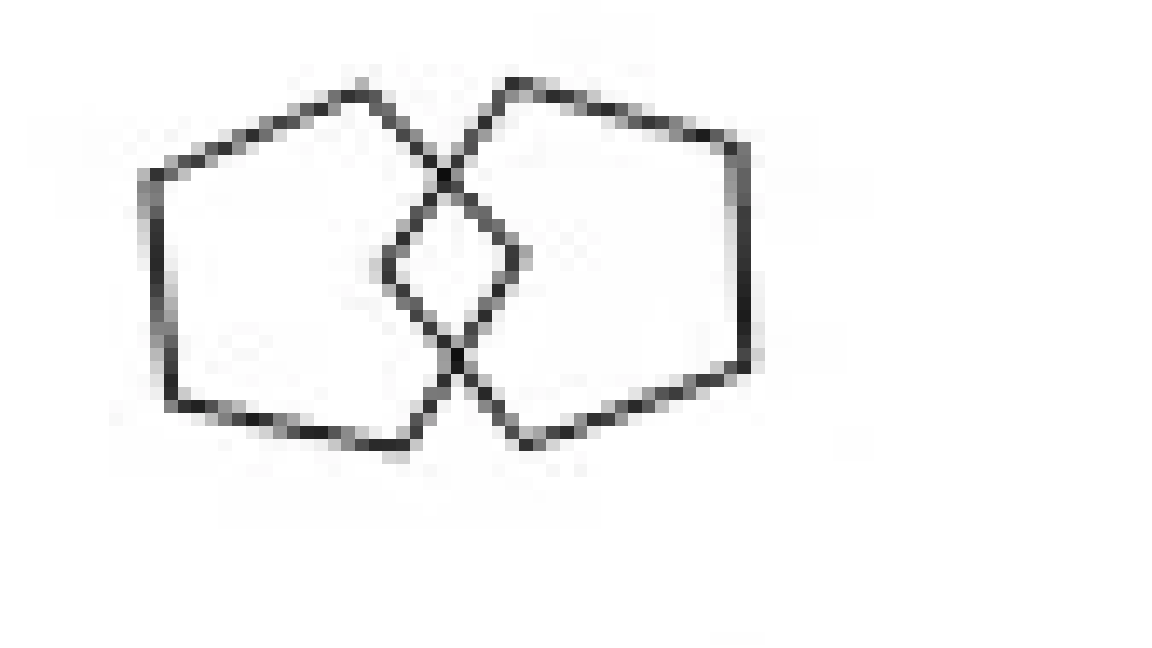
• Copying: Show the patient the picture of two intersecting pentagons and ask the patient to copy the figure exactly
as it is. All ten angles must be present and two must intersect to score one point. Ignore tremor and rotation.
|
Attention and Calculation (5 points)
Can you _______?
Can you count backwards from 100 by 7?
100, 93, 86, 79, 72, 65, 58, 51, 44, 37, 30, 23, 16, 9, 2
100
93
86
79
72
65
How do you spell World Backwards?
|
Registration 3 points
apple, table, penny
|
Name a sequence of three unrelated objects e.g. (apple, table, penny) or (ball, car, man) taking about a second to say each word. Ask the patient to repeat all three words. Score one point for each word remembered at first attempt. If response is incorrect after repeating the test five more times, recall cannot meaningfully be tested - skip section 4.
|
Recall (3 points)
• Registration (3 points): Immediate recall of three words
• Recall (3 points): Delayed recall of the three previously registered words
|
Mini-Mental State Exam Scoring Chart
Score Level of Dementia
24 and higher Normal cognition; no dementia
19 – 23 Mild dementia
10 – 18 Moderate dementia
9 and lower Severe dementia
ASSESS level of consciousness along a continuum ____________
Alert Drowsy Stupor Coma
|