The Mini Mental State Examination (MMSE)
Alzheimer’s disease to differentiate the stages of dementia.
Instructions for Administration and Scoring of the MMSE
  1. Orientation (10 points)
  2. Language and Praxis (9 points)
  3. Attention and Calculation (5 points)
  4. Registration (3 points)
  5. Recall (3 points)
Orientation (10 points)
date/day/month/season/year/location(room,floor, street address, city, province, country)
Time: 10 seconds for each reply:
  1. What is today’s date? (accept previous or next date).
  2. What day of the week is this? (accept exact answer only).
  3. What month is this? (accept either: the first day of a new month or the last day of the previous month).
  4. What season is this? (accept either: last week of the old season or first week of a new season).
  5. What year is this? (accept exact answer only).
  6. (In home) What room are we in? (accept exact answer only). (In facility) What floor of the building are we on? (accept exact answer only).
  7. (In home) What is the street address of this house? (accept street name and house number or equivalent in rural areas).
  8. What city/town are we in? (accept exact answer only).
  9. What province are we in? (accept exact answer only). (In facility) What is the name of this building? (accept exact name of institution only).
  10. What country are we in? (accept exact answer only).
Language and Praxis (9 points)
2 ( ) Name a pencil and watch.
1 ( ) Repeat the following “No ifs, ands, or buts”
3 ( ) Follow a 3-stage command: “Take a paper in your hand, fold it in half, and put it on the floor.”
1 ( ) Read and obey the following: CLOSE YOUR EYES
1 ( ) Write a sentence.
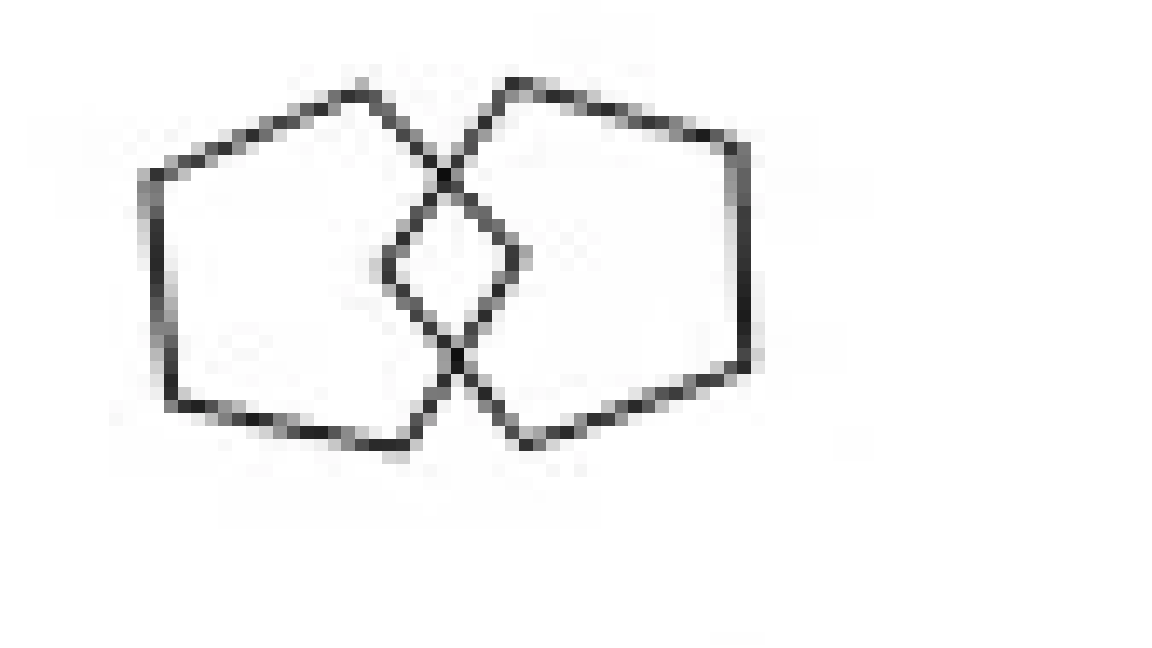
1 ( ) Copy the design shown
Language and Praxis (9 points):
• Naming: Show the patient a wrist watch and ask the patient what it is. Repeat with a pencil. Score one point for each correct naming (0-2).
• Repetition: Ask the patient to repeat the sentence after you (“No ifs, ands, or buts.”). Allow only one trial. Score 0 or 1.
• 3-Stage Command: Give the patient a piece of blank paper and say, “Take this paper in your right hand, fold it in half, and put it on the floor.” Score one point for each part of the command correctly executed.
• Reading: On a blank piece of paper print the sentence, “Close your eyes,” in letters large enough for the patient to see clearly. Ask the patient to read the sentence and do what it says. Score one point only if the patient actually closes his or her eyes. This is not a test of memory, so you may prompt the patient to “do what it says” after the patient reads the sentence.
• Writing: Give the patient a blank piece of paper and ask him or her to write a sentence for you. Do not dictate a sentence; it should be written spontaneously. The sentence must contain a subject and a verb and make sense. Correct grammar and punctuation are not necessary.
• Copying: Show the patient the picture of two intersecting pentagons and ask the patient to copy the figure exactly as it is. All ten angles must be present and two must intersect to score one point. Ignore tremor and rotation.
Attention and Calculation (5 points)
Can you _______?
Can you count backwards from 100 by 7?
How do you spell World Backwards?
count backwards from 100 by seven
spell world backwards
Registration 3 points
apple, table, penny
Name a sequence of three unrelated objects e.g. (apple, table, penny) or (ball, car, man) taking about a second to say each word. Ask the patient to repeat all three words. Score one point for each word remembered at first attempt. If response is incorrect after repeating the test five more times, recall cannot meaningfully be tested - skip section 4.
Recall (3 points)
• Registration (3 points): Immediate recall of three words
• Recall (3 points): Delayed recall of the three previously registered words
ASSESS level of consciousness along a continuum ____________
Alert Drowsy Stupor Coma

Mini-Mental State Exam Scoring Chart
Score Level of Dementia
24 and higher Normal cognition; no dementia
19 – 23 Mild dementia
10 – 18 Moderate dementia
9 and lower Severe dementia

Mental Status Exam (MSE)
At least 7.
  1. Appearance: Observes grooming, clothing, hygiene, and overall presentation. Clothing choices and cleanliness can provide insight into mood and self-care abilities.
  2. Behavior: Includes posture, movements, eye contact, psychomotor activity, and unusual gestures or tics.
  3. Cognition: Includes orientation (time, place, person), attention, memory, and executive functioning.
  4. Consciousness and Orientation: Evaluates alertness and responsiveness to stimuli, including awareness of current situation and environment.
  5. Insight and Judgment: Assesses awareness of one’s condition and the ability to make reasoned decisions.
  6. Mood and Affect: Mood refers to the patient’s sustained emotional state, while affect is the observable expression of emotion. Clinicians assess congruency between mood and affect.
  7. Perception: Screens for hallucinations or distortions in sensory perception, ensuring detailed inquiry rather than generic questions.
  8. Speech: Assesses fluency, rate, volume, tone, and coherence. Abnormalities may indicate cognitive or neurological issues.
  9. Thought Content (Suicidal/Homicidal Ideation) and Process. Thought Processes and Content: Evaluates the organization, flow, and logic of thoughts, as well as delusions, obsessions, or suicidal ideation.
    The Difference Between MSE and MMSE